Thursday, October 16, 2014

Intellectual Emergencies

In her book, Intellectual Emergencies, Lilian Katz includes a list of (continually growing) points to keep in mind in working with young children. Here are just a few of her points.

#1.  Remember that adults know more about almost everything than a small child does -- except what it feels like to be that child, and how the world makes sense to him or her.  Those things are the child's expertise which a teacher must learn in order to be able to reach and teach the child.

#2.  Take care not to confuse what is exciting, amusing and fun with what is educative.  Excitement is appropriate for entertainment and special occasions; it is short-lived pleasure -- easy come, easy go.  But what is educative requires sustained effort and involvement, often includes many routine elements, and offers long term deep satisfaction rather than momentary fun and excitement.

#3.  I believe we cannot have optimal environments for children in preschools, child care centers, and schools unless the environments are optimal for the adults who work in them.  Certainly on some days what is optimal for the children will be obtained at the expense of adults (like Halloween parties), and on other days visa versa.  But on the average, on a day-to-day basis, both the children and the adults must find their lives together satisfying, interesting, and worth living.


Wednesday, October 15, 2014

Anchor Charts

What are Anchor Charts?

Simply put, an anchor chart is a tool used largely to support instruction and to move the student towards achieving success with lessons taught in class. They are also used as a classroom management tool for students to self-monitor their behavior by gently reminding them of expectations and routines.
Anchor charts are created during the instruction of the lesson. As the teacher models the lesson or strategy, the lesson reinforcement or strategy tool is written on chart paper. Once the lesson is complete, the chart is placed in a convenient student-friendly location that the students can access it independently. This is another vehicle for academic support, especially for the visual learner. The beauty of an anchor chart is that it can be displayed as needed or determined by the student work. Some anchor charts live all year long in the classroom, while others are only displayed during the current unit of study.
Check out these examples.
What kind of anchor charts do you have to support teaching and learning?


Tuesday, October 14, 2014

The Listening Center: Sentences

The Listening Center: Sentence Activities

We need to help them hear the individual words in a sentence.  Words that relate to people, things or actions are easy because they are concrete. Because articles (and, the) don't describe people, things or actions, they are difficult to "hear" in a sentence.
Hearing the pauses in spoken language is a step towards becoming a reader. Start with simple sentences children know well. Use images or items to provide a visual for the sentence. This links words with print.

As sentences become more complex it is common for children to overlap the counting of syllables and words. In simple sentences created with one syllable words there is little chance for confusion. If you are clapping, each word gets one clap. Confusion sets in with words that have more than one syllable. Look at the sentence, "The dog is sleeping on the bed." Children will want to clap sleeping as two words instead of one. The pauses help identify the number of words in a sentence. Speak clearly with an exaggerated pause between each word.

  1. Tap a Sentence: Students tap out the number of words in a sentence. Students listen to the sentence being read and then tap it out. They can record the number of words in each sentence.
  2. Build a Sentence: Students listen to a sentence being read. As each word is said in the sentence the student builds a tower using snap blocks.
  3. Word for Word:  Provide students with a copy of the sentences being read. As each sentence is read, students place a marker on each word in the sentence.
  4. Stretch It: In this activity students listen to a sentence read and stretched the elastic after each word. See the video clip for explanation. Stretch It Video


Monday, October 13, 2014

Halloween Playdough

Halloween Play Dough
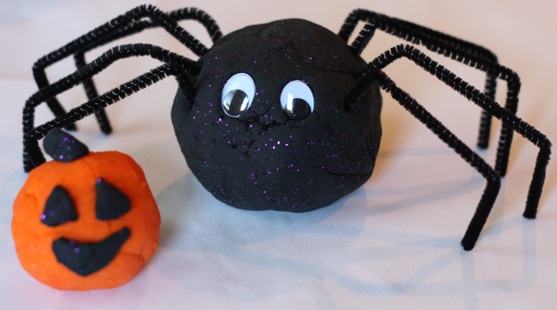
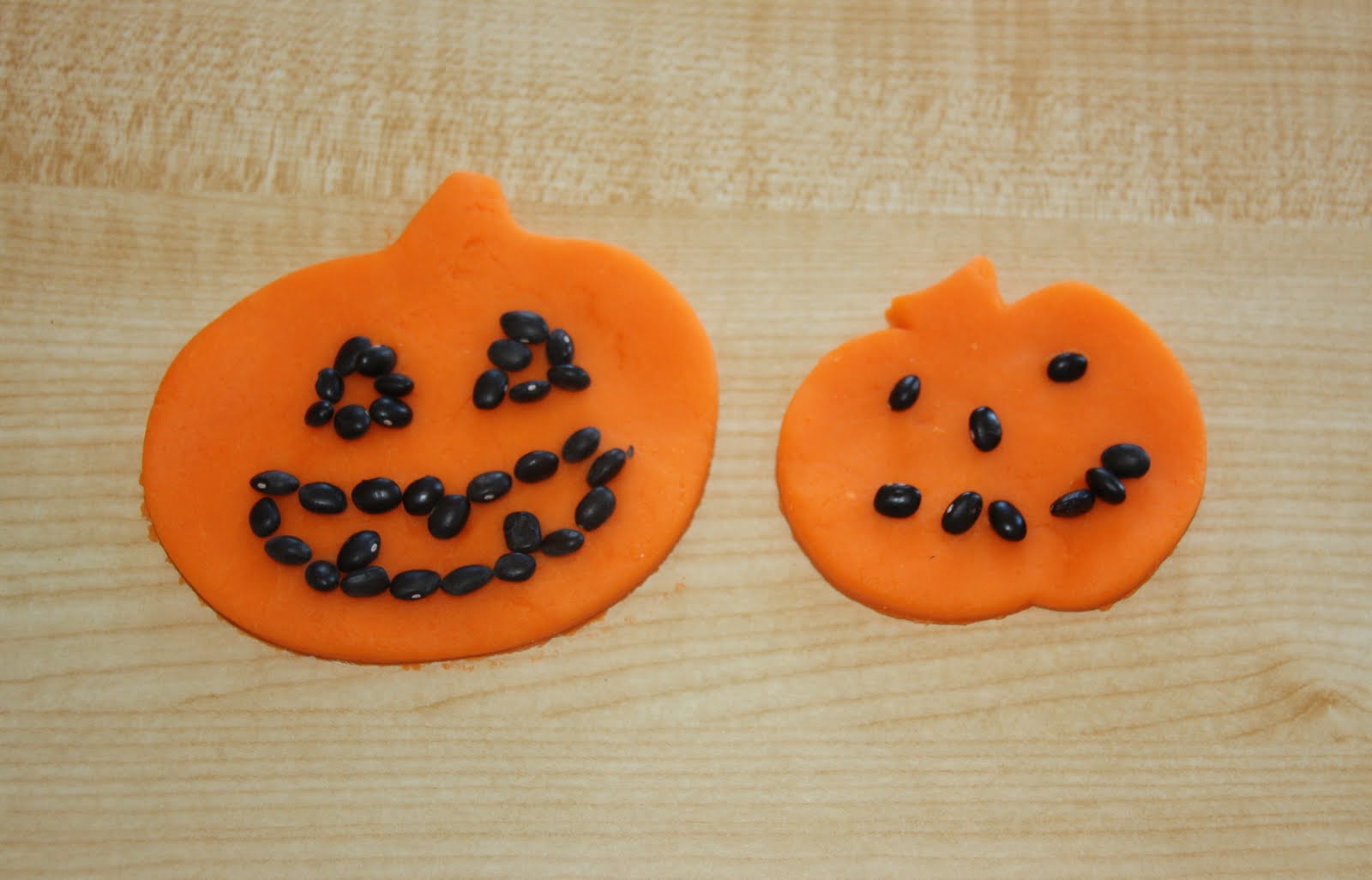
Make 2 types of play dough for Halloween: black with lots of purple glitter and orange.  Use the basic play dough recipe from the September 15th post - excluding the spices). For brighter colors, add Wilton gels, instead of food coloring. (Be careful when making the black. Your hands will be stained a purplish/reddish color). Add  purple glitter to the black play dough and then add some pipe cleaners and wiggly eyes for spiders. Put out some Halloween cookie cutters with black beans for Jack O' Lanterns. Students can write a sentence or story about their Halloween creations. 

This make & take activity is sure to be a treat not a trick!

Friday, October 10, 2014

Feature Friday: Mailbox Magazine

When I was in the classroom, I absolutely LOVED Mailbox Magazine. It was full of teaching resources. Today's feature is a website from Mailbox Magazine. If you know and love the magazine you will definitely enjoy the website. The website is http://www.themailbox.com/. Membership is FREE and you will have access to many  grade level specific resources such as learning center activities, forms, bulletin board ideas, etc. Also as a member you can sign up for different newsletters that will be emailed directly to you, .i.e.Little Learners Daily, Literature Links, Simple Centers and Games, and so on.Each day you will receive an idea to use in your classroom. You can unsubscribe to the daily email at any time. I think you will be pleased at the variety of ideas you will find.  So visit TheMailbox.com today. 

Thursday, October 9, 2014

Executive Functions

Want to Give Your Kids an Advantage? Build Executive Functions

Every parent wants their kids to have the best shot at succeeding at whatever their chosen path may be.  So we try to give them all of the right opportunities.  Some go to tutors, buy complicated programs, or drill through flashcards, but one of the best predictors of success is one that can be regularly built through play.

Study after study has displayed the influential role of executive functions in success over the long run.  Perhaps the most well-known is what is commonly referred to as the Marshmallow Test.  Back in the 60s,  Stanford researchers essentially gave preschoolers the choice of having one marshmallow now or two marshmallows later.  (And did I mention these little ones were left alone with the marshmallows until “later” arrived?)

Researchers followed their subjects for decades and found that those preschoolers who could wait longer, did better academically, reported less drug-use, and found greater life satisfaction into adulthood.
It makes sense that efficient executive functions would be a strong predictor of other successes.  Executive functions, those functions of the prefrontal cortex, include impulse-control, judgement, focus, and flexible thinking. Children with these strengths will listen in class when there are distractions, will take the time to look for right answers beyond first-glance answers, and will get their school work done when they’d rather be playing video games.  They’re better able to take their other talents and strengths, build on them, apply them intentionally, and use them in working toward their goals.

The good news is that many researchers believe that these self-regulation skills can be increased through practice and experience.  Perhaps the better news is that this often takes the shape of play!  Here are some ideas for fun ways to build executive functions:

Play Dance and Freeze.  You know the drill.  The music plays and everyone dances.  The music stops and everyone freezes.  Children have to resist the impulse to keep moving and stay frozen instead.  The same idea can be used for other stop and go games like Red Light, Green Light and Snowmen at Night or for using stop and go signs while singing.

Simon Says.  It seems easy enough.  Do what you’re told, right?  Except that you have to focus and pay attention to detail.  Instead of being distracted by the directions alone, children have to listen for that key phrase, “Simon Says”…

Opposite Games.  I love playing these with young children.  Often, I’ll say,“Listen to my directions and do what I say, but don’t let me trick you with what I do.”  So I’ll say, “Touch your nose,”while I touch my ears.  Can they fight the urge and focus only on my words?  It’s tough for those little ones, but they get better with practice!  Similar games have been played where children say the opposite of what they see on picture cards (night for day, day for night) or do opposite actions (x whenever the adult does y and y whenever the adult does x). 
These games require kids to focus on what’s important and resist what is likely their first impulse.

Pretend Play .  Dramatic play is full of benefits for young children, not least of which is the flexibility of thinking and self-control required for a child to take on another character and play out the role.  Even better, as young children build their play scripts with other children, they begin to negotiate and share ideas and build a plan for play — the next avenue in building executive functions.

Are you providing opportunities for your children to build their executive functions??

Wednesday, October 8, 2014

Shared Reading:

In early childhood classrooms, shared reading is the anchor of a balanced literacy program. So what does it look like. Here is a great illustration.

In Ms. Avery’s classroom, kindergarten students are sitting on a colorful rug waiting for the “show” to begin.  It’s shared reading time, one of their favorite times of the day.  Ms. Avery is sitting in a rocking chair with a giant easel to her right.  Perched on the easel is a Big Book.  It’s a brand new big book, one Ms. Avery has picked specifically for shared reading.

But before she begins, Ms. Avery warms–up by rereading a big book the students are already familiar with.  She reinforces some concepts of printed words or models a new reading strategy.  Now the students are prepared for the new book.

Ms. Avery takes the book from the easel, shows the children the cover, reads the title and author.  She returns the book to the easel.  Now she’s ready to open the book, turn the pages and most importantly, open wide the doors to new adventures through reading.

First, the students excitedly predict what the book is about.  There’s a lot of sharing going on as they talk about their background knowledge and similar experiences related to the book.  Ms. Avery prompts the sharing by asking guiding questions, such as:
  • “What do you think our new book is about?”
  • “Who has been to the circus?”
  • “Have you ever had trouble getting out of bed in the morning?”

Then finally, it’s time for the story.

Ms. Avery reads the tale with enthusiasm and fluent expression.  No stopping the first time through.  The first reading is to let the students simply enjoy the story and note the rhythmic pattern of the words.  During the second reading, Ms. Avery will point to the words as she reads them again.  The students know they’re invited to read along if they want.

The following day, Ms. Avery reads the book for the third time.  Now she implements other shared reading strategies into the lesson. Most students will be eager to read along by this time.

Ms. Avery has covered several words with index cards or post-it notes and asks the students to think of words that would make sense.   They can use predicting skills to help them identify the word, such as looking at the first and last letter of the word.  When the shared reading lesson is over, she puts the new big book in the class library so students can revisit it during independent reading.