WOW! These chapters were loaded with information. I don't know about you but my brain is on overload!!
Chapter 12 - Teaching for Strategies
Loved this chapter!!! I made so many connections and had so many "a-ha" moments. Where do I begin??
First, what is reading? If we charted this, what kinds of responses do you think we would get? Probably something like, a process or transaction; meaning making; using a balance of cue systems; making meaning of the world around us. All of the responses would be correct. Simply put, reading is the construction of meaning. Our job is to intentionally and systematically teach strategies within the context of whole and meaningful texts. According to the authors, "All learners have in-the-head processes they use to integrate new information with what they already know." As teachers we cannot observe these in-the-head strategies. However, we can observe behavior and guess what processes are are being used.
Just as strategies cannot be directly observed neither can they be directly taught. You teach for strategies!! I love the analogy of teaching strategies to teaching swimming. You explain the process and model but you must get in the water to be a swimmer. Same for reading. We explain and model strategies but the student must get into the books to become readers. We teach for transfer. We teach how to use strategies so the students will be able to transfer them when reading independently.
Marie Clay groups strategies in 3 broad categories: strategies for maintaining fluency; strategies for detecting and correcting errors; and strategies for problem solving new words. On page 150 the authors state that oral language is critical when anticipating the text and checking the reading to see if it makes sense. This resonated with me as I think of our population and their lack of the English language. This is why it is so important for us to build their language and prior knowledge.
The last section of this chapter talked about comprehension. According to Fountas & Pinnell, "Comprehending is not a product of reading; it is a process." I immediately thought of the 3 cueing systems - semantic, syntactic, and graphophonemic. Let me quickly review. Semantic cues are about meaning. This cueing system comes from past experiences (schema), story knowledge, illustrations, etc. Questions to ask for semantics. Does it make sense? What would make sense? Syntactic involves the grammatical structure of language. Does it sound right (grammatically)? And finally, graphophonemic looks at the relationship between letters and sounds. Does it look right? Good readers will use the 3 cueing systems when they come to a word they do not know. They will ask themselves, what would make sense? Then they confirm their prediction by asking does it sound right grammatically? And finally they further confirm by checking the beginning letter or letter cluster, then the ending letter or letter cluster, and/or looking for familiar chunks.
Guided reading groups should be strategic learning sessions. You cannot have guided reading groups unless you find out what readers are doing. Hence your running records!
Figure 12-10 on page 161 provides a list of prompts or questions for facilitating reading strategies. The goal is for students to eventually get where they use these prompts or question as they read independently.
Chapter 13 - Learning about Letters and Words
I cheered as I read this chapter. My soap box is teaching letters and sounds within context not in isolation. I will try not to go on and on! On page 163, the authors state, "Letters and words within continuous text offer different kinds of informational support than they do when isolated. The syntactic patterns of language narrow the possibilities and make it easier for children to select and use the graphic symbols." According to language theorist Roger Brown, "form follows function". We use literature for real purposes. Within the context of these experiences we help students understand form. We talk function first, then we learn form. This is why we don't do letter of the week. In many classrooms, we start with the individual letter (form) and then put it in a book, word, or name (function). When we should read the book or show the word many times (function) then talk about the individual letters (form). Michael Halliday also talks about the importance of function, "Halliday's Function". According to Halliday, children learn language in order to function in their world. We have to set up reasons for students to want to be literate. Students should have reasons for reading, writing, listening, and speaking. Okay. I'll get off my soapbox now!
There were SO many good ideas in this chapter. Here are some pages you should go back and reread.
Pages 166 - 169: Strategies for teaching letters and words in a guided reading lesson (introduction, during reading & after the reading)
Pages 169 & 170: Ways to incorporate letter and word study in a balanced literacy program (shared reading, interactive writing & writing workshop)
Pages 171 - 176: Letter and word activities (This is a great section for ideas!!)
The BIG idea I gained from this chapter is the goal for teaching letters and sounds is so students will use this knowledge as they read and write. And the best way to teach letters and sounds is within the context of meaning, purposeful reading and writing activities. FORM FOLLOWS FUNCTION
Reflection Questions:
1. What are some ways you teach letters and words? Are you teaching them within context of purposeful reading and writing?
2. How might you incorporate some of the Letter and Word study ideas in your classroom?
Wednesday, April 15, 2015

Monday, March 16, 2015
Story Retelling Braclet
Here is a simple and fun way to reinforce comprehension - a story retelling bracelet. The child slides one bead over at a time
beginning with red to help retell the story he/she just listened to or read on her
own.
Story Retelling Bracelet
Story Retelling Bracelet
 |
| Taken from Growing Book by Book |
Materials for 1 bracelet:
string or plastic lacing
and 6 stringing beads (red, orange, yellow, green, blue and purple)
Directions:
1. Measure a piece of
string for the correct size to fit on the child’s wrist.
2. String the
beads by placing the colors in this
order: red, orange, yellow, green, blue and purple.
3. Tie the string
ends together with a knot.
The retelling bracelet is ready to wear and use.
Rainbow Retelling Stem Prompts:
Red- Ready to hear a retelling of the story? The characters
in the story are…
Orange- On to where this story took place…
Yellow- You have to hear the problem in the story…
Green- Get ready for a few more details…
Blue- Better start bringing it to a close and telling you
how the problem was solved…
Purple- Picking my favorite party is easy, it was when…
Friday, March 13, 2015
All About Me Books
 Today's' feature is coming from one of our own - Natalie Melton. As I walked down the hall this morning, Natalie was sharing her "All About Me" book with a few staff members.
She wrote the book about herself and placed it in the reading center. The students literally fight over who is going to read it first. It' simple to make and a great way for the students to get to know you better.
Here's what's inside:
1. Cover introducing self
2. Birthday
3. Picture of self in school
4. Pictures of family (pets included)
5.Fun facts about self (We all now Ms. Melton LOVES polka
dots!)
6. Favorite books
Pretty much you can add anything about your self you would
like!
Thanks for sharing Natalie Melton!


Wednesday, March 11, 2015
Guided Math
 |
| Taken from Tunstall's Teaching Tidbits |
Guided Math
Tuesday, March 10, 2015
St. Patrick's Day Activities
Want some FREE activities for next week. Check these out from The Printable Princess.

Monday, March 9, 2015
Vowel Game & Assessment
 |
| Taken from Printable Princess |
Friday, March 6, 2015
Silly McGilly
 Meet Silly McGilly, the newest way to bring fun, excitement
and learning to your classroom during the month of March! Silly McGilly is a friendly leprechaun who
loves visiting classrooms to play fun little tricks on children throughout the
St. Patrick's Day season.
Meet Silly McGilly, the newest way to bring fun, excitement
and learning to your classroom during the month of March! Silly McGilly is a friendly leprechaun who
loves visiting classrooms to play fun little tricks on children throughout the
St. Patrick's Day season.
Here’s how Silly McGilly’s magic works:
read his story, then place his doll in the window on the night your
classroom is ready for a trick to be played. This is the invitation for the “real” Silly McGilly to come and visit
you. The next morning, your students
will delight in seeing what shenanigans Silly McGilly has been up to while they
were home! The magic of Silly McGilly is as limitless as your imagination!!
You
can purchase your own copy of Silly McGilly HERE..
Tuesday, March 3, 2015
QR Code Sight Word Activity
I LOVE my iPad. One thing I really think is cool is the ability to scan a funny little black and white box and get information!! Yes, a Quick Response code, better known as QR code. A QR Code is a square grid of smaller black and white squares containing
encoded data that is designed to be optically scanned, as to provide
information about a product or service. Qrafter (Crafter) is a two-dimensional barcode scanner for
iPhone, iPad and iPod Touch. Its main purpose is to scan and parse the contents
of QR Codes.
(Don't you love it when I talk technical! LOL)
I came across this sight word activity using QR Codes. They are so easy. The kids love them. And they are a great
technology teaching tool to use in your classroom, or even to send home for
students to use at home.
Below is the link to a QR Code Sight Word Video Read the Room Packet. It's free and a fun way to review those sight words.
The packet contains:
QR Codes Freebie
(Don't you love it when I talk technical! LOL)
 |
| Taken from Kindergarten: Holding Hands and Sticking Together |
Below is the link to a QR Code Sight Word Video Read the Room Packet. It's free and a fun way to review those sight words.
The packet contains:
- 36 sight word cards, each with a QR code that links to a video to go with that word. Each of the YouTube videos is on ViewPure, so that there are no ads, comments, or distractions.
- 12 cards with QR codes that link to sight word songs which have lots of sight words.
- A recording sheet to use if you want, that you can print front/back to make it easier to manage for the children.
- Directions for using the sight words.
QR Codes Freebie
Monday, March 2, 2015
Green & Gold Shimmery Playdough
Recipe:
2 1/2 cups flour
1/2 cup salt
3 small packages of Kool Aid drink mix (Lemon-lime)
3 TBSP oil
2 cups boiling water
Lots of gold glitter
Mix together flour,
salt, Kool Aid, glitter, and oil.
Add boiling water and
mix until the dough is cool enough to touch. (I cooked on low heat until I got
the right consistency.)
Knead until smooth.
Store in a Ziploc bag
in the fridge!

Friday, February 27, 2015
Sight Word Wordle
Have you ever heard of "Wordle"? A Wordle is used to generate “word clouds” from text that
you provide. The clouds give greater prominence to words that appear more
frequently in the source text.
This is a great center game to reinforce sight words relevant to your class.
Go to the link below for complete directions. This link also provides some other sight word center activities. Do you have a sight word center? If not you may want to try these ideas.
Sight Word Wordle
 |
| Taken from The First Grade Parade |
The objective of this activity is to have your kids search
for sight words. I keep my Sight Wordles
in a plastic sheet protector and have the kids use their Expo markers to
highlight the words they find.
You can do this lots of different ways...
* have the kids search for words they KNOW {this would be
great for a quick assessment!}
* have the kids search for SPECIFIC words {great for a
review!!!}
*have the kids search for words with 2 letters, 3 letters,
etc.
* have the kids search for words that rhyme with __________.
The list goes on.... You can print off several at a time for more variety. You can differentiate by lists. The possibilities are endless!!!
Go to the link below for complete directions. This link also provides some other sight word center activities. Do you have a sight word center? If not you may want to try these ideas.
Sight Word Wordle
Thursday, February 26, 2015
Meaningful Differences: The 30 million word gap
During our PD session yesterday, Kate and Jamie talked about the importance of oral language for reading success. It made me think of a very interesting research study that was conducted by Todd Risley and Betty Hart called Meaningful Differences (1995).
Betty Hart and Todd Risley studied the usage of language and words in American homes. Their findings establish the absolute importance of children’s early experiences with language. By 48 months children in professional homes have heard on average 45 million words. In the same period of time, children in welfare homes have heard on average 13 million words. This language and vocabulary disparity has been referred to as “the 32 million word catastrophe.”

Betty Hart and Todd Risley studied the usage of language and words in American homes. Their findings establish the absolute importance of children’s early experiences with language. By 48 months children in professional homes have heard on average 45 million words. In the same period of time, children in welfare homes have heard on average 13 million words. This language and vocabulary disparity has been referred to as “the 32 million word catastrophe.”
They found that the sheer number of words heard varied greatly along
socio-economic lines. On average, children from families on welfare were
provided half as much experience as children from working class
families, and less than a third of the experience given to children from
high-income families. In other words, children from families on
welfare heard about 616 words per hour, while those from working class
families heard around 1,251 words per hour, and those from professional
families heard roughly 2,153 words per hour. Thus, children from
better financial circumstances had far more language exposure to draw
from.
In addition to looking at the number of words exchanged, the researchers
also looked at what was being said within these conversations. What
they found was that higher-income families provided their children with
far more words of praise compared to children from low-income
families.  Conversely,
Conversely,
children from low-income families were found to endure far more
instances of negative reinforcement compared to their peers from
higher-income families. Children from families with professional
backgrounds experienced a ratio of six encouragements for every
discouragement. For children from working-class families this ratio was
two encouragements to one discouragement. Finally, children from
families on welfare received on average two discouragements for every
encouragement.
In simple terms, kids start kindergarten at vastly different
language levels, thus impacting their reading success. So the question becomes ... What can we do to bridge the vocabulary gap of our students?
With something to think about this is Mrs. Morris reminding you to be ...
To read more about Hart & Risley's study go to the links below.
To read more about Hart & Risley's study go to the links below.
Wednesday, February 25, 2015
St. Patrick's Day Bingo
 I love Bingo games!! They reinforce so many skills - visual discrimination, listening skills, counting, vocabulary, and playing games with rules.
Below is a link to a free printable for a St. Patrick's Day Bingo game. You could play it during small group to build vocabulary. Or you could place in a center for partners to play (social skills - games with rules).
St. Patrick's Day Bingo
Monday, February 23, 2015
Kinetic Sight Word Activity… With a Beach Ball
Fun Sight Word Activity
This will be one of your students' favorite games. It is a simple game with lots of learning
potential.
 |
| Taken from Kids Activities Blog |
A Beach Ball
A Permanent Marker
Room to gently toss a
ball to each other.
Ideas on learning with a sight words ball:
- If your students are already reading, have them read the words on the color they catch.
- If your students are not yet reading, have them point to a word and you tell them what it is before they toss the ball.
- If your students know all the words, have them create a sentence with as many words as they can from the color they picked.
You can also use with letters - identify letter, letter sound, etc.
Thanks Jen Hollon for sharing!
Thursday, February 19, 2015
More Pie
I don't know about you but some days I feel like there is just NOT enough of me to go around. Wife, mother, grandmother, daughter, sister, friend, colleague, leader, supervisor, teacher, etc. The list goes on and on. I was reading this blog and came across this article and it really spoke to me. It reminds me of what my grandmother use to tell me. She would say, "Honey as long as you can look at yourself in the mirror at the end of the day and know you did the best you could that's all you can do." I never really thought about my time as a pie. Hope you enjoy this as much as I did.

More Pie
Recently, I was reading a post about
what a teacher wished she had more of (I can’t find the post or else I’d link
to it) – things like more time, more resources, more to help with student
achievement.
As I was reading, of course, I was nodding my head in
agreement, but I also kept thinking, what I really wish I had more of, was
simply, me.
I am very lucky. I have an
amazing student teacher this year, a loving foster grandmother, and a
paraprofessional who works in my room for many hours each day, but even with
all those adults, and I’ve worked with no other adults in the room, so I know
how what it’s like to be all alone, I still sometimes wish there was more me to
go around.
The analogy I use is a pie – simply
because pies are always used as analogies and I love pie. Apple pie,
cherry pie, most any pie will do, but I digress. I’m the pie and however
many students I have is the number of slices. Of course, some kids get bigger
slices than others, but everyone gets a piece.
Some days there may be one
or two that get almost half my pie and the others share the rest… as my
sprouts have heard over and over, ‘fair isn’t equal’ – especially when dealing
with pie. No matter how I slice and dice it, I always wish the pie was bigger.
Sure more books, iPads, and math manipulatives would be great, but more of me
is what they really want.
As much as I’ve thought about it,
I’ve yet to discover a way to clone myself. Perhaps someday, there will be ten
of me in my classroom, two or three Mr. Halperns sitting at each table smiling,
laughing, tying shoes, zipping coats, applying bandaids, reading one on one,
and just being me. It might seem a little creepy, but I think my students
would love it.
Of course, this isn’t going to
happen anytime soon. So I try my best to make sure each child gets a
little of my attention each day. Have I had a conversation with
everyone? Did they get a hug or pat on the back from me yet today?
There are five kids who need shoes tied, one with a bloody finger,
another vomiting on the floor, and two boys wrestling on the floor – I need to
handle all these situations with clarity, ease, and love in the next two
minutes before the principal arrives for my observation… and somehow I do.
They say wizards and magic aren’t
real, but anyone who works with small children knows:
We are the music makers,
And we are the dreamers
of dreams,
Wandering by lone
sea-breakers,
And sitting by desolate
streams;—
World-losers and
world-forsakers,
On whom the pale moon
gleams:
Yet we are the movers and
shakers
Of the world for ever, it
seems.
As
much as I’d love to give a little more of me, I have to remind myself, and I do
so daily, I’m already giving all of me and that’s all anybody can strive
to do.
Taken from Look at My Happy Rainbow
Wednesday, February 18, 2015
Story Starter Sticks
I came across this idea on one of my favorite blogs and LOVE this idea. If your kids need some motivation to write, try these story starter sticks. Simply include a picture as the motivator and a story
opener on the back. Hot glue to a craft stick and place in a decorative container. For example, you could have a picture of a leprechaun on the front and on the back write "One day I found a leprechaun." The students would write the sentence as the opening and include 2-3 detail sentences and an ending. Or you could ask the students to write 3 words to describe the leprechaun. You could tailor the writing activity to meet your students' needs. Place a variety of sticks so students have options on what to write.
 |
| Taken from Tunstall's Teaching Tidbits |
Tuesday, February 17, 2015
Worksheets Don't Grow Dendrites Book Study (Optional)
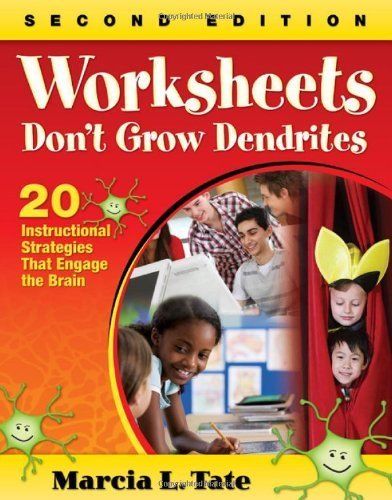 Get ready to do some on-line professional learning with some
of my favorite bloggers! If you have never read this book, you MUST! You do not have to have the book to participate in the book study. This is NOT required. Just an option to grow professionally. (We may have some extra books in the library with the teacher resources.) You can join in for whatever part you like! If you are not a blogger, that is OK! Join in on the fun. This is a positive collaboration between teachers! The whole point is to encourage each other with inspiring ideas while still using research based best practice.
Get ready to do some on-line professional learning with some
of my favorite bloggers! If you have never read this book, you MUST! You do not have to have the book to participate in the book study. This is NOT required. Just an option to grow professionally. (We may have some extra books in the library with the teacher resources.) You can join in for whatever part you like! If you are not a blogger, that is OK! Join in on the fun. This is a positive collaboration between teachers! The whole point is to encourage each other with inspiring ideas while still using research based best practice.
Linky parties will take place on these different blogs each
time. Here is the order so you can plan accordingly :) Enjoy!
Kickin it in Kindergarten- Chapters 1 &2 (February 28th)
Mrs. Wills Kindergarten- Chapter 3 (March 7th)
Queen of the First Grade Jungle Chapter 4 (March 10th)
Fabulous in First Chapter 5 (March 14th)
One Extra Degree Chapter 6 (March 17th)
Mrs. Jump’s Class Chapter 7 (March 28th)
The First Grade Parade Chapter 8 (March 31st)
Mrs. Ehle’s Kindergarten Chapter 9 &10 (April 4th)
What The Teacher Wants Chapter 11 (April 7th)
First Grader At Last Chapter 12 (April 11th)
Erica’s Ed Ventures
Chapter 13 (April 14th)
KinderGals Chapter 14 &15 (April 18th)
A Rocky Top Teacher Chapter 16 (April 21st)
Mrs. Wills Kindergarten Chapter 17 (April 25th)
Little Warriors Chapter 18 (April 28th)
Falling Into First Chapter 19 (May 2nd)
Kickin’ it in Kindergarten Chapter 20 (May 5th)
Thursday, February 12, 2015
Building Bridges Through Words
"Words, language, communication, and expression all create an intricate web: at the center, on the fringe, and woven into the web is the relationship," observes Laura Mickley in her Exchange article, "Building Bridges through Words," She continues...
"The words you choose and how you use them either facilitates positive, effective relationships with children and families or impedes those relationships. As early care and education professionals, it is our responsibility to express an interest in families and children. We need to acknowledge children and families’ strengths and the ways in which they are effective. When working with children, we need to accept the presumptions that all people are basically good, and families want what is best for their children. Upon those presumptions we can build a relationship, the very foundation of which is communication. New children and families will look to you to set the tone. Effective, positive communication will help to build that base. Positive and affirming words will make you approachable.
"Building these relationships with children and families starts at registration and continues with each interaction. We need to express an interest in the whole family, point out their strengths at opportune moments while using communication to establish that foundation."
Are you building any bridges with your words?
With something to think about, this is Mrs. Morris reminding you ...
"The words you choose and how you use them either facilitates positive, effective relationships with children and families or impedes those relationships. As early care and education professionals, it is our responsibility to express an interest in families and children. We need to acknowledge children and families’ strengths and the ways in which they are effective. When working with children, we need to accept the presumptions that all people are basically good, and families want what is best for their children. Upon those presumptions we can build a relationship, the very foundation of which is communication. New children and families will look to you to set the tone. Effective, positive communication will help to build that base. Positive and affirming words will make you approachable.
"Building these relationships with children and families starts at registration and continues with each interaction. We need to express an interest in the whole family, point out their strengths at opportune moments while using communication to establish that foundation."
Are you building any bridges with your words?
With something to think about, this is Mrs. Morris reminding you ...
Wednesday, February 11, 2015
Teaching Time Freebies
This is a great freebie for teaching time. It combines collaborative and independent learning activities.
Telling Time Freebies
1. Representing Clocks in Small Groups

2. Center Game/Independent Work

3. Writing about Time in Math Journals

4. Making a Model with Partners

Telling Time Freebies
1. Representing Clocks in Small Groups
2. Center Game/Independent Work
3. Writing about Time in Math Journals
4. Making a Model with Partners
Tuesday, February 10, 2015
Mastery Connect
 I am very excited about Mastery Connect! I see it as a useful source for us to share and receive great teaching ideas. Make sure to login and browse the Resource Pins. Create your own boards and share with your colleagues. We have SO much expertise in the building. Let's start sharing and following each other so our students will benefit from our knowledge.
Happy Pinning!!
Monday, February 9, 2015
Guided Reading Blog Party
Guided Reading Blog Party: Chapters 9 - 11
Okay, I'll admit Chapters 9 & 10 were not my favorite. Now, I am not saying I did not learn anything. I did!
According to the authors, matching books to individual students is a critical component of guided reading. On page 107, the authors compare selecting books to acquiring a valuable collection. Do any of you collect jewelry, art, pottery, quilts, etc? If so, you probably choose each piece very carefully. When you add a new piece you reexamine what you have to make sure the addition will fit the collection. So it is with selecting books for our classrooms. We must be thoughtful and careful with our selection. On pages 107 and 108, the authors provide some characteristics to consider in creating a solid selection of books. One important characteristic is depth. You must have enough books in each level in your collection so you have the flexibility to select books that suit the individuals in your groups. Another important characteristic is content. Make sure your collection of books cover a wide range of topics that appeal to students' life experiences and interests.
The second part of Chapter 9 explored text gradients. First, let's make sure we are all on the same page in terms of a text gradient. What exactly is a text gradient? A gradient of text is an ordering of books according to a specific set of characteristics. Gradient means ascending or descending in a uniform or consistent way, so the levels of a gradient are defined in relation to each other. As you go up the gradient of text, the texts get harder; conversely, as you go down, they get easier. At each level of the gradient, there is a cluster of characteristics that helps you think about the texts at that level and how they support and challenge readers. Appendix M,page 287 - 389, is a great resource for text levels. Books are listed alphabetical by title and then by level. If you are not sure of a book's level, check out Appendix M.
Chapter 10 provides a general description of characteristics for each level. The authors also provide important behaviors to notice and support as students read at each level. This can assist with your instructional planning.
In my opinion, Chapter 11 (Introduction of books) was most helpful. According to Don Holdaway, "A book introduction is a brief and lively discussion in which the teacher interests the students in the story and produces an appropriate set for reading it." Marie Clay states that a book introduction is like a conversation. In order for the listener to understand, the speaker must key into the listener's prior knowledge or provide some kind of introduction. On page 137, Figure 11-1 illustrates Clay's discussion of teacher involvement in book introductions. Based on the students' needs and characteristics of the text, teachers shift up or down this gradient. At the bottom of page 137, there is a list of strategies you might use when introducing stories to children. For example, explain important ideas and concepts to students prior to reading. The rest of the chapter provides great examples of book introductions for kindergarten and first grade (I Can - Kdg; The Hungry Kitten and Billy Goats Gruff - 1st grade).
So, how do you know if your book introductions are effective? Ask yourself, "How did my students read the text? Did they understand the text? Did the reading of text allow for them to use effective reading strategies?"
Reflection:
1. Reflect on your organization of book levels. Are your texts leveled? Do you have a system in place? Are your texts part of a text gradient? Review your levels, are there any changes you would make based on working with the texts for a couple of years and your students' needs?
2. Based on your through assessment of your leveled books, are there levels which need more titles? Did you consider the characteristics on pages 107 & 108 in establishing a good, solid collection of texts.
3. Videotape or record a book introduction. To what extent did the students understand the story? Were their substitutions meaningful? Did they read with fluency and accuracy? Did the introduction help them when encountering points of difficulty? Did students use strategies or processes modeled in the introduction?
Okay, I'll admit Chapters 9 & 10 were not my favorite. Now, I am not saying I did not learn anything. I did!
According to the authors, matching books to individual students is a critical component of guided reading. On page 107, the authors compare selecting books to acquiring a valuable collection. Do any of you collect jewelry, art, pottery, quilts, etc? If so, you probably choose each piece very carefully. When you add a new piece you reexamine what you have to make sure the addition will fit the collection. So it is with selecting books for our classrooms. We must be thoughtful and careful with our selection. On pages 107 and 108, the authors provide some characteristics to consider in creating a solid selection of books. One important characteristic is depth. You must have enough books in each level in your collection so you have the flexibility to select books that suit the individuals in your groups. Another important characteristic is content. Make sure your collection of books cover a wide range of topics that appeal to students' life experiences and interests.
The second part of Chapter 9 explored text gradients. First, let's make sure we are all on the same page in terms of a text gradient. What exactly is a text gradient? A gradient of text is an ordering of books according to a specific set of characteristics. Gradient means ascending or descending in a uniform or consistent way, so the levels of a gradient are defined in relation to each other. As you go up the gradient of text, the texts get harder; conversely, as you go down, they get easier. At each level of the gradient, there is a cluster of characteristics that helps you think about the texts at that level and how they support and challenge readers. Appendix M,page 287 - 389, is a great resource for text levels. Books are listed alphabetical by title and then by level. If you are not sure of a book's level, check out Appendix M.
Chapter 10 provides a general description of characteristics for each level. The authors also provide important behaviors to notice and support as students read at each level. This can assist with your instructional planning.
In my opinion, Chapter 11 (Introduction of books) was most helpful. According to Don Holdaway, "A book introduction is a brief and lively discussion in which the teacher interests the students in the story and produces an appropriate set for reading it." Marie Clay states that a book introduction is like a conversation. In order for the listener to understand, the speaker must key into the listener's prior knowledge or provide some kind of introduction. On page 137, Figure 11-1 illustrates Clay's discussion of teacher involvement in book introductions. Based on the students' needs and characteristics of the text, teachers shift up or down this gradient. At the bottom of page 137, there is a list of strategies you might use when introducing stories to children. For example, explain important ideas and concepts to students prior to reading. The rest of the chapter provides great examples of book introductions for kindergarten and first grade (I Can - Kdg; The Hungry Kitten and Billy Goats Gruff - 1st grade).
So, how do you know if your book introductions are effective? Ask yourself, "How did my students read the text? Did they understand the text? Did the reading of text allow for them to use effective reading strategies?"
Reflection:
1. Reflect on your organization of book levels. Are your texts leveled? Do you have a system in place? Are your texts part of a text gradient? Review your levels, are there any changes you would make based on working with the texts for a couple of years and your students' needs?
2. Based on your through assessment of your leveled books, are there levels which need more titles? Did you consider the characteristics on pages 107 & 108 in establishing a good, solid collection of texts.
3. Videotape or record a book introduction. To what extent did the students understand the story? Were their substitutions meaningful? Did they read with fluency and accuracy? Did the introduction help them when encountering points of difficulty? Did students use strategies or processes modeled in the introduction?
Subscribe to:
Posts (Atom)